

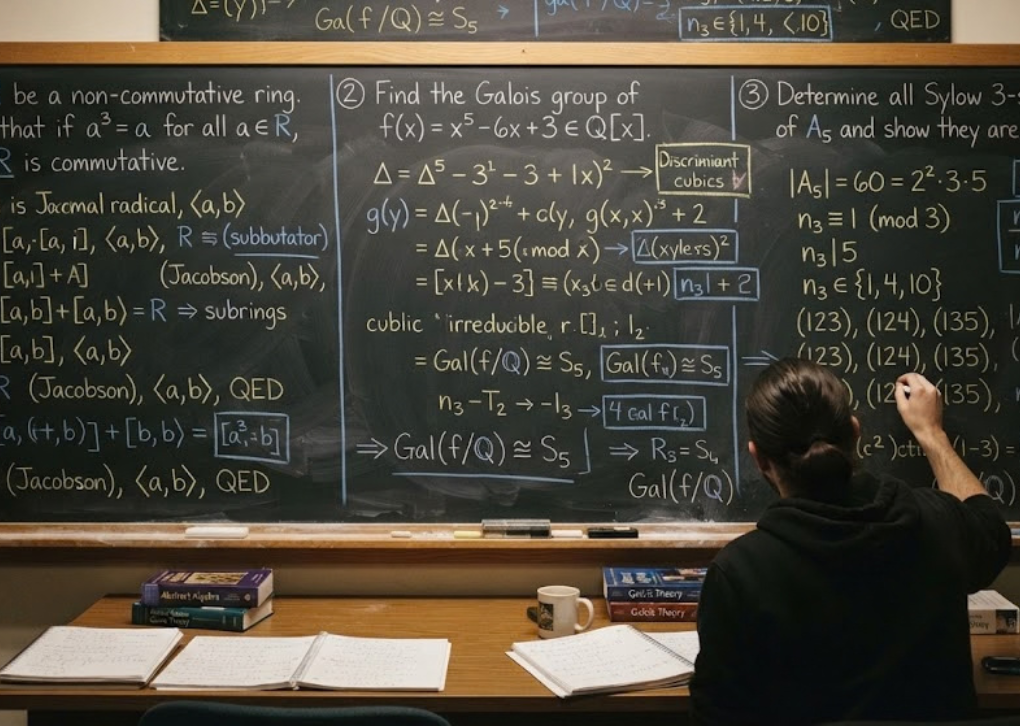
Searching for Superhardalgebra problems.com usually points readers toward one main goal: finding extremely challenging algebra problems and learning how to solve them. While difficult algebra questions can look intimidating, most are not impossible because they require unknown mathematics. They are difficult because they combine familiar ideas in unfamiliar ways.
Hard algebra problems often test more than calculation. They test whether you can recognize patterns, choose the right method, simplify complex expressions, and stay organized through multiple steps.
This guide explains what makes algebra problems challenging, which techniques help most, and how students can develop the skills needed to solve advanced questions with confidence.
What Are Super Hard Algebra Problems?
Super hard algebra problems are questions that require deeper reasoning than standard classroom exercises. They usually combine several algebra concepts instead of testing one isolated skill.
A basic equation may ask you to solve:
\[ 2x+5=15 \]
A more advanced problem may involve:
- multiple variables
- fractions
- exponents
- radicals
- polynomial relationships
- hidden patterns
- systems of equations
- restrictions on possible answers
The difficulty usually comes from recognizing the structure of the problem.
A student may know every formula needed but still struggle because they do not know which formula or strategy applies.
Why Do Algebra Problems Become Difficult?
They Combine Multiple Skills
Many advanced algebra questions are not difficult because of one complicated step. They are difficult because several normal steps appear together.
For example, a problem may require:
- Simplifying an expression.
- Factoring a polynomial.
- Finding possible values.
- Checking whether those values satisfy the original equation.
Each step is manageable alone. Together, they create a challenge.
The Solution Method Is Hidden
Easy exercises usually tell students what technique to use.
A textbook might say:
“Factor the quadratic.”
Harder problems remove that instruction.
Students must decide:
- Should I factor?
- Should I substitute?
- Should I create a new variable?
- Should I use an identity?
- Should I analyze the equation instead of solving directly?
That decision-making process is where advanced algebra begins.
The Numbers Are Designed to Distract
Many difficult algebra problems include complicated numbers, but the numbers are often not the main challenge.
A problem may look complicated because of:
\[ (x+3)^2-(x-3)^2 \]
However, recognizing the difference-of-squares pattern immediately simplifies the expression.
Strong algebra students learn to search for structure before performing calculations.
Common Types of Super Hard Algebra Problems
1. Polynomial Problems
Polynomial questions involve expressions containing variables raised to different powers.
Example:
\[ x^3+3x^2+3x+1 \]
A beginner may try expanding everything.
An experienced solver recognizes:
\[ (x+1)^3 \]
The ability to identify patterns dramatically reduces solving time.
Common polynomial techniques include:
- factoring
- grouping
- using identities
- comparing coefficients
2. Systems of Equations
Systems require solving multiple equations together.
Example:
\[ x+y=10 \]\[ xy=21 \]
The challenge is not only finding values but choosing the best approach.
Possible methods include:
- substitution
- elimination
- graphical interpretation
- using relationships between roots
3. Inequalities
Inequalities are often harder than equations because the answer is usually a range rather than a single value.
Students must understand:
- interval notation
- positive and negative values
- sign changes
- boundary conditions
A common mistake is solving an inequality exactly like an equation.
4. Radical Equations
Radical problems involve square roots or higher roots.
Example:
\[ \sqrt{x+5}=x-1 \]
The main challenge is that operations like squaring can create extra solutions.
A reliable solver always checks answers in the original equation.
How to Approach Super Hard Algebra Problems
Step 1: Understand the Structure Before Solving
Do not immediately calculate.
First ask:
- What type of expression is this?
- Are there repeated patterns?
- Are there useful identities?
- Are some terms connected?
A few seconds of analysis can prevent many minutes of unnecessary work.
Step 2: Simplify Before Applying Advanced Methods
Many students attempt complicated methods too early.
Start with:
- combining similar terms
- removing unnecessary brackets
- reducing fractions
- organizing information
A simpler equation is easier to analyze.
Step 3: Look for Substitution Opportunities
Substitution is one of the most powerful tools in advanced algebra.
For example:
\[ x^4+2x^2+1 \]
Instead of treating it as a fourth-degree expression, replace:
\[ x^2=y \]
The problem becomes:
\[ y^2+2y+1 \]
which is much easier.
Step 4: Verify Every Solution
Advanced algebra problems often contain traps.
A solution can appear correct but fail in the original equation.
Always check:
- excluded values
- negative roots
- denominator restrictions
- domain limitations
Verification separates careful solutions from incomplete ones.
Skills Needed for Advanced Algebra
Pattern Recognition
Strong algebra students notice relationships quickly.
Examples include:
- perfect squares
- difference of squares
- symmetric expressions
- repeated structures
Logical Organization
Writing clear steps matters.
A messy solution increases the chance of mistakes.
Mathematical Flexibility
Sometimes the first approach does not work.
Advanced problem solving requires changing methods when necessary.
Persistence
Difficult algebra requires patience.
A problem may need several attempts before the correct idea appears.
Common Mistakes Students Make
Trying to Memorize Every Method
There are too many possible variations of algebra problems.
Understanding principles is more effective than memorizing hundreds of examples.
Ignoring Restrictions
For example, dividing by an expression containing a variable can remove possible values.
Always consider whether a step changes the original problem.
Doing Too Much Calculation
Long calculations often hide simple patterns.
Before expanding everything, ask whether there is a shorter path.
Giving Up Too Early
Difficulty does not always mean a problem is beyond your ability.
Many advanced problems become easier after identifying the key observation.
How to Practice Difficult Algebra Problems Effectively
Start With Challenging Problems, Not Impossible Ones
A good progression is:
- Basic algebra review.
- Multi-step equations.
- Advanced equations.
- Competition-style problems.
Jumping directly into extremely difficult questions can create frustration.
Study Solutions Actively
Do not only read answers.
Ask:
- Why was this method chosen?
- What clue suggested this approach?
- Could another method work?
The goal is learning the thinking process.
Keep a Problem-Solving Journal
Record:
- difficult problems attempted
- mistakes made
- useful patterns discovered
- strategies that worked
Over time, repeated structures become easier to recognize.
Are Super Hard Algebra Problems Useful?
Yes, when used correctly.
Difficult algebra problems can improve:
- analytical thinking
- mathematical confidence
- logical reasoning
- problem-solving ability
However, they should support learning rather than replace fundamentals.
A student who struggles with basic equations will usually benefit more from strengthening foundations before attempting advanced challenges.
The Best Mindset for Difficult Algebra
The goal is not to solve every problem instantly.
Experienced mathematicians often spend significant time exploring possibilities.
A productive approach is:
- understand the problem
- test ideas
- learn from mistakes
- refine the method
Difficult algebra is less about speed and more about developing reliable reasoning.
5. Frequently Asked Questions
What makes an algebra problem extremely difficult?
An algebra problem becomes difficult when it requires several concepts together, hidden patterns, unusual transformations, or careful reasoning instead of direct calculation.
How do you solve super hard algebra problems?
Start by identifying the structure, simplifying the expression, choosing an appropriate technique, and checking every solution carefully.
Are difficult algebra problems necessary for learning algebra?
They are useful for advanced development, but students should first understand basic algebra concepts before attempting extremely challenging questions.
What topics appear in advanced algebra problems?
Common topics include polynomials, equations, inequalities, functions, systems, radicals, exponents, and algebraic identities.
Why do students struggle with hard algebra?
Many students struggle because they focus on calculations rather than recognizing patterns and selecting the right strategy.
Can anyone learn to solve difficult algebra questions?
Yes. Improvement comes from consistent practice, understanding concepts, and analyzing solutions rather than simply memorizing answers.
