

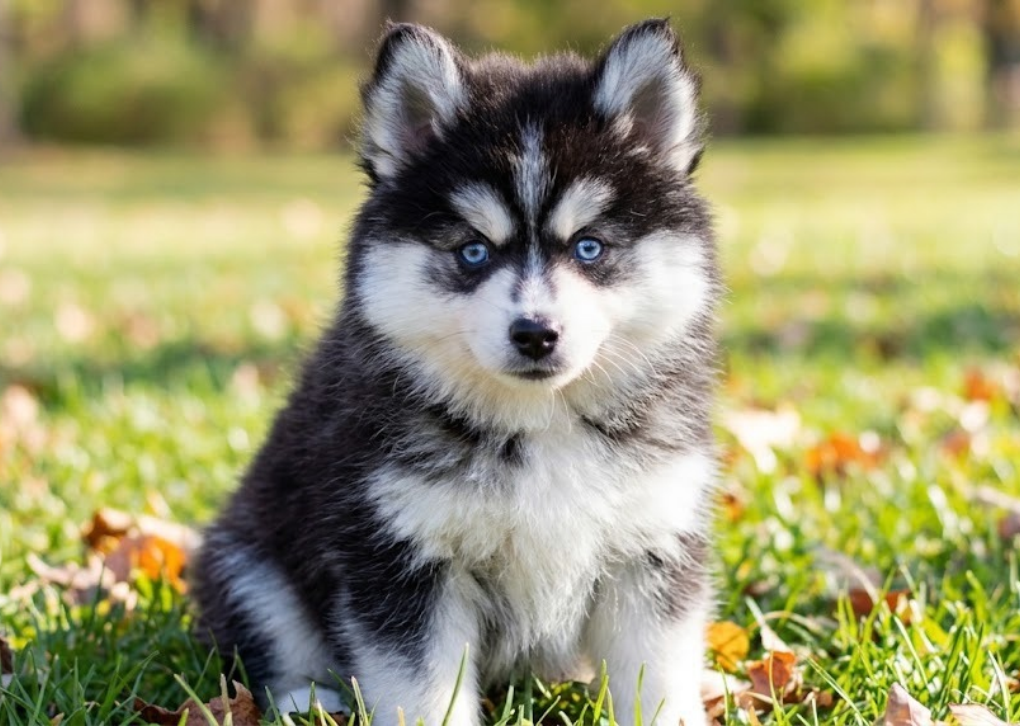
The Pomerusky is a name commonly used to describe the Pomsky, a designer dog created by crossing a Pomeranian with a Siberian Husky. This unusual combination brings together two breeds with very different sizes, physical characteristics and personalities. The result is an attractive companion that can have the fluffy appearance of a Pomeranian and the distinctive facial markings of a Husky.
Pomeruskies have attracted attention among people looking for a smaller dog with a northern-breed appearance. However, their appeal goes beyond their looks. These dogs can be intelligent, energetic, affectionate and occasionally stubborn. Their adult size, coat characteristics and temperament also vary considerably because they inherit different combinations of traits from their parents.
Understanding these differences is essential before bringing one home. This guide explains what a Pomerusky is, how large it can grow, what its personality is like, how much grooming it needs and what prospective owners should consider before choosing a puppy.
What Is a Pomerusky?
A Pomerusky is a Pomeranian and Siberian Husky cross, more commonly called a Pomsky. It is a designer dog rather than a traditional purebred breed with a long-established breeding history.
The combination was developed to produce a companion dog with some of the Husky’s striking appearance and the smaller size associated with the Pomeranian. Depending on its genetic background, an individual dog may inherit a thick double coat, pointed ears, a curled tail, blue eyes or distinctive facial markings.
However, there is no guarantee that every puppy will look like a miniature Siberian Husky.
Some puppies resemble their Pomeranian parent more strongly, while others have more noticeable Husky characteristics. Even puppies from the same litter can look surprisingly different.
Which two breeds make a Pomerusky?
The two foundation breeds have distinct characteristics.
Pomeranian: The Pomeranian is a small companion dog known for its fluffy coat, alert expression and confident personality. Despite its size, it is generally active, intelligent and attentive to its surroundings.
Siberian Husky: The Siberian Husky is a medium-sized working dog originally developed for pulling sleds over long distances. It is known for its endurance, thick double coat, athletic build and independent temperament.
Combining these breeds produces a dog with potentially contrasting characteristics. A puppy might inherit the Pomeranian’s compact body but display the Husky’s endurance and vocal tendencies.
That unpredictability is one of the most important things to understand about this cross.
Is Pomerusky an officially recognized dog breed?
The distinction matters when researching breeders and puppy registrations.
The Pomsky is generally classified as a designer crossbreed, not a purebred dog recognized by the American Kennel Club (AKC). The AKC maintains an official list of its recognized breeds, and the Pomsky is not included in that list.
American Kennel Club+1
Some independent Pomsky organizations maintain their own standards, registration systems and breeding guidelines. These organizations can provide useful information, but their standards should not be confused with recognition by a national kennel organization.
The spelling Pomerusky is also not a separate established breed classification.
Pomerusky Appearance and Physical Characteristics
One reason people search for this crossbreed is its distinctive appearance. A Pomerusky may look like a miniature Husky, a fluffy Pomeranian or a combination of both.
Its appearance depends on inherited genetics rather than a guaranteed design.
Size and weight
Pomeruskies generally fall within the small-to-medium companion-dog range, although some individuals may be smaller or larger.
Commonly reported adult weight ranges vary across breeding populations. Veterinary breed profiles describe adult Pomskies weighing approximately 12–35 pounds, with considerable variation between individual dogs.
PetMD+1
| Physical characteristic | General description |
|---|---|
| Size | Small to medium |
| Weight | Approximately 12–35 pounds |
| Height | Often around 10–15 inches |
| Body | Compact, athletic or moderately sturdy |
| Ears | Usually upright and pointed |
| Tail | Often fluffy and carried over the back |
| Coat | Usually dense and double-layered |
| Eyes | Brown, blue or mixed colors |
These are general estimates, not guaranteed measurements or a universal breed standard.
Coat colors and patterns
The coat can display a wide range of colors inherited from either parent.
Common appearances include:
-
Black and white
-
Grey and white
-
Cream
-
White
-
Red and white
-
Brown
-
Sable
-
Black with tan markings
Some dogs have the familiar Husky-style facial mask, while others have predominantly solid-colored coats.
Eye color also varies. Brown and blue eyes are possible, and some individuals have heterochromia, a condition in which each eye has a different color.
Blue eyes can be visually striking, but eye color should never be treated as proof of good genetics or overall health.
How does a full-grown Pomerusky look?
An adult Pomerusky usually develops a more defined body shape, a mature double coat and facial characteristics that reflect its genetic inheritance.
Puppies can change considerably as they grow. Their coat texture, proportions and facial appearance may become different during adolescence.
For this reason, prospective owners should ask to see both parents whenever possible. Photographs of previous adult puppies from the same breeding line can also help provide a more realistic expectation.
Pomerusky Temperament and Personality
The Pomerusky can be affectionate, intelligent, playful and highly attached to its family. However, personality is not completely predictable because the two parent breeds have different behavioral tendencies.
Some dogs are outgoing and eager to interact with everyone. Others may be more independent, vocal or selective about unfamiliar people and animals.
Intelligence and curiosity
Both Pomeranians and Siberian Huskies are intelligent dogs, although they may approach learning differently.
A Pomerusky can quickly understand household routines, recognize familiar commands and learn games involving rewards. Its curiosity can also make it an enthusiastic explorer.
The challenge is keeping that intelligence occupied.
A dog that receives little mental stimulation may develop unwanted habits such as excessive barking, chewing, digging or searching for ways to entertain itself.
Interactive toys, short training sessions and food puzzles can help provide appropriate mental challenges.
Affection and family attachment
Many Pomskies enjoy spending time with their owners and participating in everyday family activities.
They may follow familiar people around the house, seek attention and become excited when someone returns home.
However, strong attachment can sometimes make independent-time training more difficult. Some individuals may experience separation-related distress.
Gradually teaching a puppy to remain comfortable alone for short periods can help establish healthier routines.
Vocal behavior
Potential owners should not assume that a smaller Husky mix will be quiet.
Huskies are known for their vocal communication, including howling and other distinctive sounds. Pomeranians can also be alert and vocal.
A Pomerusky may inherit either tendency.
Early training can help manage unnecessary barking and teach the dog appropriate ways to respond to visitors, unfamiliar sounds and outdoor activity.
Are Pomeruskies good with children?
They can be suitable family companions, particularly in households where children understand how to interact respectfully with dogs.
However, compatibility depends on the individual dog’s temperament, training, socialization and physical size.
Young children should always be supervised around dogs. They should not pull ears, disturb a sleeping dog, grab its coat or interfere with food.
A puppy with a smaller frame may also be vulnerable to accidental injuries during rough play.
Do Pomeruskies get along with other pets?
Some live comfortably with other dogs and household animals, while others require more careful introductions.
The Husky’s working background means prey-drive tendencies can be relevant when introducing smaller animals.
Introduce new pets gradually, use controlled interactions and provide separate safe spaces. Never assume that two animals will automatically become comfortable together.
Pomerusky Exercise Requirements
Although a Pomerusky may be relatively small, it should not automatically be treated as a low-energy lapdog.
The Siberian Husky contributes athletic characteristics, while the Pomeranian is also an active companion breed. Consequently, many Pomskies benefit from a combination of daily physical activity and mental stimulation.
Daily walks
Regular walks help maintain fitness, provide opportunities for exploration and expose the dog to different environments.
The appropriate amount depends on age, health, conditioning and individual energy level.
Adult dogs may enjoy two daily walks combined with playtime, but puppies require shorter, age-appropriate activities.
Avoid forcing a young puppy to undertake strenuous exercise while its body is still developing.
Interactive play
Play is another useful way to provide activity.
Consider activities such as:
-
Fetch with appropriately sized toys
-
Gentle tug games
-
Hide-and-seek
-
Sniffing games
-
Puzzle feeders
-
Basic obedience exercises
-
Supervised play with compatible dogs
Mental stimulation is particularly useful because physical exercise alone may not satisfy an intelligent, curious dog.
Can a Pomerusky live in an apartment?
Yes, an apartment can be suitable if the dog receives enough exercise, training and attention.
The quality of its daily routine matters more than simply having a large outdoor space.
However, barking and howling can create problems in shared buildings. Owners should work on calm behavior, noise management and gradual alone-time training.
A secure outdoor area is useful, but it does not replace walks or supervised activities.
Pomerusky Grooming and Shedding
Grooming is an important consideration for anyone interested in owning a Pomerusky.
Most Pomskies inherit a dense double coat consisting of a soft undercoat and an outer layer of protective hair. This coat can provide insulation, but it also requires regular maintenance.
How much do Pomeruskies shed?
Most Pomskies shed, and some shed heavily.
The amount depends on coat type, genetics, climate and seasonal changes. Many experience periods of heavier shedding when their undercoat changes.
Owners should be prepared for loose hair around furniture, clothing and household surfaces.
This crossbreed is not considered reliably hypoallergenic.
Brushing routine
Regular brushing helps remove loose hair and reduces the likelihood of tangles and mats.
A practical routine includes:
-
Brush the coat several times a week.
-
Check behind the ears and around the legs.
-
Pay attention to the undercoat.
-
Use a suitable comb or undercoat brush.
-
Increase grooming during heavier shedding periods.
The exact schedule should depend on the dog’s individual coat.
Veterinary grooming guidance also recommends checking areas where tangles commonly develop, including the armpits, behind the ears and along the legs.
VCA Animal Hospitals+1
Bathing and coat maintenance
Bathing should be performed when necessary using a dog-appropriate shampoo.
Over-bathing can irritate the skin or affect the natural oils that help maintain coat condition.
Dry the coat thoroughly, especially where dense undercoat retains moisture.
Regularly check the ears, teeth, paws and nails as part of general grooming.
Should you shave a Pomerusky?
Shaving a double-coated dog purely for summer convenience is generally not recommended.
Its coat helps provide insulation and protection. Removing too much hair can expose the skin to sun damage and may interfere with normal coat growth.
Discuss medical or severe matting-related grooming needs with a veterinarian or qualified professional groomer rather than assuming that a complete haircut is necessary.
Pomerusky Health and Common Concerns
A Pomerusky can live a healthy and active life when provided with appropriate veterinary care, nutrition, exercise and responsible breeding.
However, there is an important limitation: the crossbreed is relatively recent, and long-term population-level health information remains limited.
It would be misleading to suggest that every Pomerusky has the same health risks or that crossing two breeds automatically produces a healthier dog.
Potential inherited health concerns
Because these dogs can inherit characteristics from either parent, prospective owners should understand the health conditions associated with both foundation breeds.
Some areas worth discussing with a veterinarian and breeder include:
Patellar luxation: This condition involves the kneecap moving out of its normal position. It is a recognized concern in smaller dogs, including Pomeranians.
Hip problems: Hip dysplasia can affect dogs of different sizes. Appropriate screening is important when evaluating breeding dogs.
Eye conditions: Certain inherited eye diseases can occur in dogs from the parent breeds. The relevant screening depends on the specific family lines.
Dental problems: Smaller dogs can be prone to dental crowding and periodontal disease. Regular toothbrushing and veterinary dental examinations are useful preventive measures.
Cardiac concerns: Some inherited heart conditions are relevant to Pomeranian breeding lines and should be considered during health screening.
These are potential concerns, not a diagnosis or a prediction that an individual dog will develop them.
The importance of genetic testing
A responsible breeder should be able to explain the health background of both parents and provide appropriate health-screening documentation.
Depending on the breeding lines, useful checks may include:
-
Patellar evaluations
-
Hip assessments
-
Eye examinations
-
Cardiac evaluations
-
Relevant DNA testing
-
General veterinary health examinations
DNA testing can identify particular genetic variants, but it cannot predict every future illness.
A clear health-testing plan should consider the actual risks associated with both parent breeds rather than relying on a single commercial DNA report.
How long does a Pomerusky live?
Pomsky lifespan estimates commonly fall around 12–15 years, although individual longevity varies.
Genetics, nutrition, preventive veterinary care, body condition and living environment can all influence a dog’s health over its lifetime.
PetMD+1
Regular checkups are important even when a dog appears healthy.
Pomerusky Nutrition and Feeding
A balanced diet supports healthy growth, muscle development, energy levels and coat condition.
The best feeding plan depends on the dog’s age, weight, activity level and health.
Feeding a Pomerusky puppy
Puppies need food formulated for appropriate growth and development.
Their feeding schedule should be based on their age, body condition and the manufacturer’s nutritional guidance.
Avoid choosing food simply because it is marketed for a particular designer breed. Nutritional completeness and suitability are more important than breed-related marketing.
Adult feeding requirements
Adult dogs need a balanced diet with appropriate amounts of protein, fats, carbohydrates, vitamins and minerals.
Portion sizes should be adjusted according to activity and body condition.
Because adult Pomeruskies can vary in size, a feeding quantity suitable for one dog may be inappropriate for another.
Foods to avoid
Some everyday human foods are dangerous to dogs.
Avoid giving your Pomerusky:
-
Chocolate
-
Grapes and raisins
-
Onions and garlic
-
Xylitol-containing products
-
Alcohol
-
Macadamia nuts
Keep potentially dangerous foods away from curious puppies and contact a veterinarian immediately if accidental ingestion occurs.
Fresh drinking water should always be available.
Pomerusky Training and Socialization
Training should begin as soon as the puppy arrives home.
A Pomerusky may inherit intelligence and independence from both parents. This combination can make learning enjoyable but sometimes challenging.
Use positive reinforcement
Reward-based training is a useful approach for teaching desirable behavior.
Reward your dog when it responds correctly, follows a command or remains calm in a challenging situation.
Useful rewards include:
-
Small training treats
-
Verbal praise
-
Toys
-
Short play sessions
-
Attention and affection
Keep lessons short and consistent. Repeating simple exercises regularly is generally more effective than expecting a young puppy to concentrate for long periods.
Teach essential commands
Begin with foundational commands:
-
Sit
-
Stay
-
Come
-
Leave it
-
Down
-
Walk calmly on a leash
Recall training is particularly important. Some dogs may inherit a strong instinct to explore, making reliable off-leash behavior difficult.
Use a leash or secure enclosed area rather than relying on an unproven recall.
Early socialization
Introduce puppies to appropriate everyday experiences in a safe, controlled and positive way.
This may include:
-
Different household sounds
-
Friendly people
-
Supervised interactions with other dogs
-
Car journeys
-
Grooming routines
-
Veterinary handling
-
Different walking environments
Puppy socialization should be planned with veterinary vaccination advice in mind.
The aim is to help the dog become comfortable with normal life rather than overwhelming it with too many unfamiliar experiences at once.
Pomerusky Puppies: How to Choose a Responsible Breeder
Finding a responsible breeder is one of the most important steps when considering a Pomerusky.
Because the crossbreed is popular for its appearance, prospective owners should be cautious about advertisements that promise extremely small sizes, rare eye colors or guaranteed adult characteristics.
No responsible breeder can guarantee every physical and behavioral feature of a puppy.
Questions to ask a breeder
Before paying a deposit, ask:
-
Can I meet the mother and, where possible, see information about the father?
-
What health tests have both parents received?
-
Can you provide original health-screening documents?
-
What are the adult sizes of previous puppies from these lines?
-
How are the puppies raised and socialized?
-
Have the puppies received veterinary examinations?
-
What vaccinations and parasite treatments have been completed?
-
What support is available after the puppy goes home?
-
What happens if the puppy develops a serious health issue?
A breeder should answer these questions clearly and allow prospective owners to make informed decisions.
Warning signs of irresponsible breeding
Be cautious if a seller:
-
Refuses to provide health records.
-
Will not allow a suitable visit or independent verification.
-
Offers immediate delivery without proper puppy checks.
-
Advertises guaranteed blue eyes or teacup adult sizes.
-
Cannot explain the parent dogs’ backgrounds.
-
Pressures buyers to make immediate payments.
-
Offers several different designer crosses without demonstrating responsible breeding practices.
Avoid choosing a puppy based entirely on photographs.
The health, behavior and welfare of the animal should matter more than its coat pattern or eye color.
How Much Does a Pomerusky Cost?
The price varies according to location, breeder practices, parental genetics, health testing and puppy availability.
Some US-based breed organizations and veterinary breed profiles report prices in the approximate range of $2,000–$5,000. However, this should be treated as an indicative market range rather than a universal or current quotation.
APKC+1
The price in other countries may be considerably different.
Factors that influence puppy prices
| Factor | Why it matters |
|---|---|
| Parental background | Different breeding lines may have different demand |
| Health screening | Responsible testing involves additional costs |
| Breeder reputation | Breeding practices and aftercare can influence pricing |
| Location | Local supply, demand and transport affect availability |
| Age | Older puppies and adult dogs may have different prices |
| Veterinary care | Vaccinations and initial examinations add expenses |
Additional ownership expenses
The purchase price is only one part of the financial commitment.
Future expenses may include:
-
Quality dog food
-
Routine veterinary examinations
-
Vaccinations
-
Parasite prevention
-
Grooming supplies
-
Professional grooming
-
Training classes
-
Toys and enrichment activities
-
Emergency veterinary treatment
Before purchasing, calculate the expected lifetime cost rather than focusing only on the initial puppy price.
Is a Pomerusky Right for Your Lifestyle?
A Pomerusky can be a wonderful companion, but it is not automatically suitable for every household.
Its needs should be considered carefully before making a commitment.
Advantages
-
Attractive appearance with distinctive coat patterns.
-
Potentially affectionate and people-oriented personality.
-
Intelligent and capable of learning.
-
Enjoys interactive games and activities.
-
Can adapt to apartment living with adequate exercise.
-
May fit well into active family households.
Potential disadvantages
-
Heavy seasonal shedding.
-
Regular grooming requirements.
-
Unpredictable adult size and appearance.
-
Possible vocal behavior.
-
Can be independent or stubborn during training.
-
May struggle with extended periods alone.
-
Responsible breeders and health testing can be expensive.
Who should consider this dog?
A Pomerusky may be a good option for someone who:
-
Has time for daily exercise.
-
Enjoys training and interacting with dogs.
-
Can maintain a regular grooming routine.
-
Understands the uncertainty associated with crossbreed genetics.
-
Can provide companionship and gradual independence training.
-
Has budgeted for routine and unexpected veterinary expenses.
It may be less suitable for someone who wants a consistently quiet, low-maintenance dog that can remain alone for long periods.
Pomerusky vs. Pomeranian vs. Siberian Husky
Understanding the differences between the three can help prospective owners decide which dog is more appropriate.
| Feature | Pomerusky | Pomeranian | Siberian Husky |
|---|---|---|---|
| Breed type | Designer cross | Purebred | Purebred |
| Size | Small to medium | Toy | Medium |
| Energy | Variable, often moderate to high | Active | High |
| Coat | Usually double | Double | Double |
| Shedding | Often heavy | Heavy | Heavy |
| Temperament | Variable | Confident and alert | Friendly and independent |
| Training | Requires consistency | Intelligent | Independent |
| Exercise | Individual needs vary | Regular activity | Substantial activity |
The Pomerusky combines characteristics of both parents, but it does not necessarily offer a predictable middle ground.
For example, a smaller body does not guarantee lower exercise requirements, and a fluffy coat does not guarantee a calm personality.
Choosing between these dogs should involve considering their individual care requirements rather than appearance alone.
5. Frequently Asked Questions
1. Is Pomerusky another name for Pomsky?
Yes. Pomerusky is a less common spelling used to describe the Pomsky, a designer cross between a Pomeranian and a Siberian Husky. Pomsky is the more widely established name.
2. How big does a Pomerusky get?
An adult Pomerusky commonly weighs approximately 12–35 pounds, although individual dogs can fall outside this range. Its adult size depends on parental genetics, generation and breeding line.
3. Are Pomeruskies good family dogs?
They can make affectionate family companions when properly trained and socialized. However, interactions with young children should always be supervised, and individual temperament should be considered.
4. Do Pomeruskies shed a lot?
Yes, many Pomeruskies shed considerably because they inherit double coats from their parent breeds. Seasonal shedding can be particularly noticeable, making regular brushing important.
5. How much does a Pomerusky puppy cost?
Prices vary by country, breeder, parental background and health testing. Some US market estimates fall between $2,000 and $5,000, but prices should always be checked locally.
6. Are Pomeruskies easy to train?
They are intelligent and capable of learning commands, but some inherit an independent or stubborn temperament. Consistent positive reinforcement, early socialization and short training sessions can improve results.
7. How long do Pomeruskies live?
Pomsky lifespan estimates are generally around 12–15 years. Individual longevity depends on genetics, preventive healthcare, nutrition and overall living conditions.
