

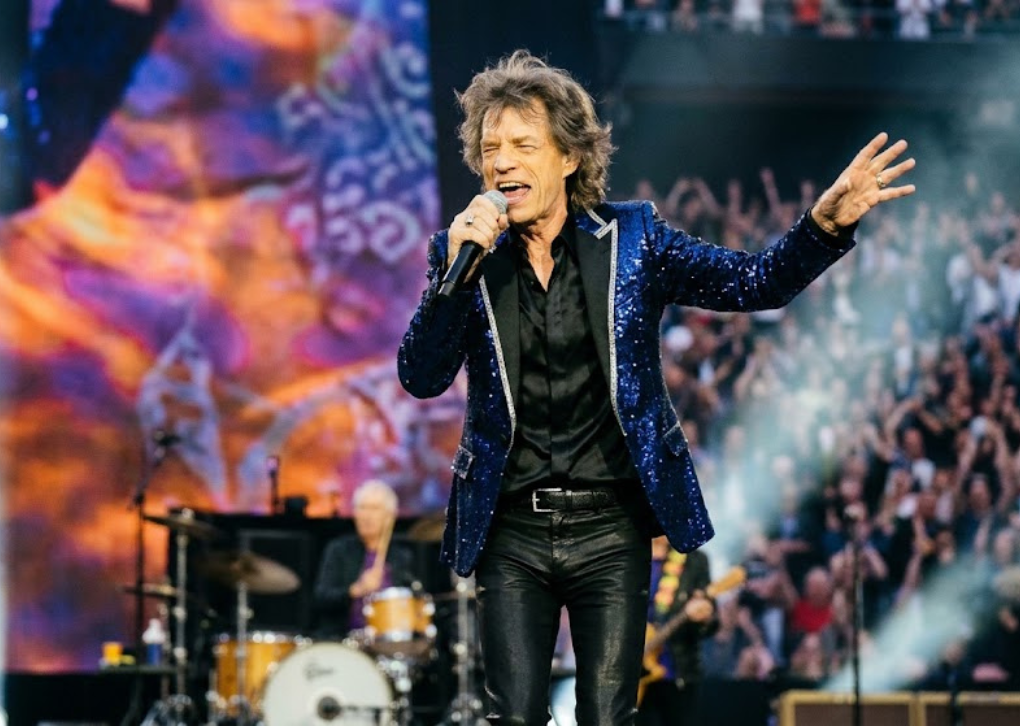
Mick Jagger is one of the most recognizable figures in rock music, best known as the charismatic lead singer of the Rolling Stones. With a career spanning more than six decades, he has helped shape the sound, attitude and performance style of modern rock and roll.
Born in Dartford, Kent, England, on July 26, 1943, Jagger developed an early interest in blues and rock music before becoming part of one of the most successful bands in music history. His partnership with guitarist Keith Richards produced some of rock’s most memorable songs, while his distinctive voice and energetic stage presence established him as an influential performer.
Beyond his work with the Rolling Stones, he has explored solo music, film production and other creative projects. His achievements have earned him international recognition, including a British knighthood for services to music.
In 2026, his musical career continues to attract attention following the release of the Rolling Stones album Foreign Tongues. His story offers a fascinating look at how a young music enthusiast became a defining figure in popular culture.
Who Is Mick Jagger?
Mick Jagger is an English singer, songwriter, musician and occasional actor, internationally recognized as the frontman of the Rolling Stones.
His full name is Michael Philip Jagger. He became famous for his expressive singing, distinctive dancing, confident personality and ability to connect with audiences during live performances.
Jagger is also an accomplished songwriter. His creative partnership with Keith Richards helped produce numerous influential recordings, combining blues, rock, rhythm and blues, country and other musical styles.
Here are some essential facts about his life and career.
Mick Jagger: Quick Facts
| Detail | Information |
|---|---|
| Full name | Michael Philip Jagger |
| Popular name | Mick Jagger |
| Date of birth | July 26, 1943 |
| Age | 83 (November 2026) |
| Birthplace | Dartford, Kent, England |
| Nationality | British |
| Profession | Singer, songwriter, musician and producer |
| Famous for | Lead vocalist of the Rolling Stones |
| Musical genres | Rock, blues and rock and roll |
| Longtime collaborator | Keith Richards |
| First Rolling Stones album | The Rolling Stones (1964) |
| Knighthood | 2002 |
| Latest Rolling Stones studio album | Foreign Tongues (2026) |
His career is particularly notable because he has remained associated with the same legendary band while also developing independent musical interests.
Early Life and Childhood
Mick Jagger was born on July 26, 1943, in Dartford, a town in Kent, southeastern England.
He grew up in a family that valued education. His father, Basil Jagger, worked as a teacher, while his mother, Eva, worked as a hairdresser and was involved in local community activities.
Music became an important part of his childhood. Jagger enjoyed listening to American rock and roll and rhythm and blues recordings, which introduced him to musical styles that would later influence his work.
His early interests included singing and learning musical instruments. He also became involved in school activities and developed an interest in performing.
His Education
Jagger attended Dartford Grammar School, where he studied alongside his childhood friend Keith Richards.
He later enrolled at the London School of Economics (LSE), one of Britain’s well-known higher education institutions.
Although he initially pursued academic studies, his growing interest in music eventually changed his plans.
His reunion with Richards became an important turning point. Their shared enthusiasm for American blues music encouraged them to explore songwriting and performing together.
Rather than completing his university education, Jagger decided to concentrate on building a musical career.
That decision would eventually lead to international success.
How Mick Jagger Became Famous
The beginning of Jagger’s professional music career is closely connected to the formation of the Rolling Stones in 1962.
He reunited with Keith Richards after recognizing their shared interest in blues recordings. Both musicians admired American blues performers and wanted to create music influenced by that tradition.
They became involved with Brian Jones, Bill Wyman and Charlie Watts, helping establish the original lineup of the Rolling Stones.
Jagger became the lead vocalist and one of the band’s central creative figures.
The Early Rolling Stones Years
The group began performing in London clubs, developing a reputation for energetic performances and a sound influenced by American blues and rhythm and blues.
Their early recordings included songs originally written and performed by American blues artists.
The band’s growing popularity eventually attracted the attention of Decca Records.
In 1964, the Rolling Stones released their debut album, The Rolling Stones. The record helped introduce the group to a much wider audience.
Their breakthrough came with successful singles, including:
-
The Last Time
-
(I Can’t Get No) Satisfaction
-
Get Off of My Cloud
The success of these songs established the Rolling Stones as a major force in British and international popular music.
The Success of Satisfaction
(I Can’t Get No) Satisfaction became one of the band’s defining recordings.
Released in 1965, the song featured Keith Richards’ instantly recognizable guitar riff and Jagger’s distinctive vocal delivery.
Its lyrics captured feelings of frustration and dissatisfaction, connecting with a generation experiencing significant cultural changes.
The song became a defining example of the Rolling Stones’ musical identity and helped establish Jagger as an internationally recognized rock vocalist.
Mick Jagger and Keith Richards: A Legendary Musical Partnership
The relationship between Mick Jagger and Keith Richards is one of the most important creative partnerships in rock history.
Their friendship began during childhood, although they later lost contact before reconnecting as young adults.
Their shared enthusiasm for blues music created the foundation for a songwriting partnership that became central to the Rolling Stones.
How Their Songwriting Partnership Works
Jagger and Richards, often associated with the songwriting name Jagger/Richards, developed a distinctive creative approach.
Richards frequently contributes guitar riffs and musical arrangements, while Jagger is known for his lyrics, vocal melodies and creative direction.
However, their contributions are not limited to those roles. Both musicians have participated in developing songs, experimenting with arrangements and shaping the band’s overall sound.
Some of their best-known collaborative compositions include:
-
(I Can’t Get No) Satisfaction
-
Paint It Black
-
Sympathy for the Devil
-
Jumpin’ Jack Flash
-
Brown Sugar
-
Angie
-
Start Me Up
Their relationship has experienced disagreements over the years, particularly concerning the band’s musical direction and individual creative interests.
Despite these tensions, they have continued working together.
Their partnership demonstrates how two musicians with different personalities and artistic approaches can create a remarkably enduring musical legacy.
Mick Jagger’s Most Famous Songs
Much of Jagger’s popularity comes from his work with the Rolling Stones.
His voice has become associated with some of the most recognizable recordings in rock music.
The following songs represent important moments in his musical career.
| Song | Year | Significance |
|---|---|---|
| (I Can’t Get No) Satisfaction | 1965 | International breakthrough |
| Paint It, Black | 1966 | Famous for its distinctive sitar-influenced arrangement |
| Ruby Tuesday | 1967 | Memorable melodic rock recording |
| Jumpin’ Jack Flash | 1968 | Defining rock single |
| Sympathy for the Devil | 1968 | Notable lyrical and musical experimentation |
| Honky Tonk Women | 1969 | Major international hit |
| Wild Horses | 1971 | Influential emotional ballad |
| Brown Sugar | 1971 | One of the band’s most recognizable recordings |
| Angie | 1973 | Popular rock ballad |
| Start Me Up | 1981 | Major international hit |
These songs demonstrate the range of musical styles explored by the Rolling Stones.
Some emphasize blues-inspired guitar arrangements, while others feature acoustic instrumentation, experimental production or energetic rock rhythms.
Jagger’s vocal performances helped connect these different styles and gave the band a recognizable identity.
Mick Jagger’s Solo Career
Although the Rolling Stones remain the most important part of his musical identity, Jagger has also pursued an independent recording career.
His solo projects allowed him to experiment with musical styles and collaborate with artists outside the band.
Solo Albums
His principal solo studio albums include:
| Album | Release year |
|---|---|
| She’s the Boss | 1985 |
| Primitive Cool | 1987 |
| Wandering Spirit | 1993 |
| Goddess in the Doorway | 2001 |
He also contributed music to the 2004 film Alfie, including the soundtrack song Old Habits Die Hard, which won a Golden Globe for Best Original Song.
Why He Explored Solo Music
Jagger’s solo recordings gave him an opportunity to work with different musicians, producers and musical influences.
His independent work explored elements of pop, dance, funk, rock and contemporary production.
Although his solo career did not reach the same commercial and cultural scale as the Rolling Stones, it demonstrated his willingness to experiment rather than rely entirely on the band’s established sound.
It also provided a different perspective on his abilities as a songwriter and recording artist.
The Rolling Stones Through the Decades
The Rolling Stones have remained one of the most enduring groups in popular music.
Their history includes major commercial successes, changing musical influences, personnel changes and several generations of listeners.
Jagger has played a central role throughout this journey.
The 1960s: International Breakthrough
The band’s early years established its reputation as a blues-influenced British rock group.
Songs such as Satisfaction, Paint It, Black and Jumpin’ Jack Flash helped define its musical identity.
The Rolling Stones became major participants in the British Invasion, introducing British rock music to audiences around the world.
The 1970s: Creative Success
The 1970s produced some of the band’s most celebrated albums.
Important releases included:
-
Sticky Fingers (1971)
-
Exile on Main St. (1972)
-
Goats Head Soup (1973)
-
Some Girls (1978)
During this period, the band’s music incorporated broader influences, including country, funk and disco.
Jagger’s stage performances also became increasingly recognizable for their energy and theatrical personality.
The 1980s: Tensions and New Directions
The band experienced disagreements over musical direction and individual projects.
Jagger continued developing his solo career, while Richards maintained his interest in the Rolling Stones’ traditional musical identity.
Despite these tensions, the group reunited creatively and released Steel Wheels in 1989.
The accompanying tour helped demonstrate that the band still had considerable international appeal.
The 1990s and 2000s: Continued Musical Activity
The Rolling Stones continued recording and touring.
Important albums included Voodoo Lounge (1994), Bridges to Babylon (1997) and A Bigger Bang (2005).
The band also celebrated its musical history through major tours and compilation releases.
Jagger remained central to its performances, maintaining his role as frontman.
The 2010s: Preserving the Legacy
During the 2010s, the Rolling Stones continued performing and revisiting the musical influences that shaped their early career.
Their 2016 album Blue & Lonesome returned to blues covers, demonstrating the importance of the genre in their musical development.
The band also continued touring internationally.
The 2020s: New Music and Continuing Creativity
The death of drummer Charlie Watts in 2021 was a major loss for the group.
However, the remaining members continued working together.
In 2023, they released Hackney Diamonds, their first studio album of original material since 2005.
The album received significant attention and won the 2025 Grammy Award for Best Rock Album.
In 2024, the group toured North America in support of the record.
In July 2026, the Rolling Stones released another studio album, Foreign Tongues, featuring 14 tracks and contributions from several guest musicians.
The album includes appearances by Paul McCartney, Steve Winwood, Robert Smith and Chad Smith, alongside a contribution from Charlie Watts recorded before his death.
This release demonstrates that the band’s recording career remains active more than six decades after its formation.
Mick Jagger’s Latest Musical Activities in 2026
One of the most significant recent developments in Jagger’s career is the release of Foreign Tongues.
The album arrived on July 10, 2026, through Polydor and Universal Music.
Its 14-track collection follows Hackney Diamonds and brings together the band’s familiar rock and blues influences with additional musical experimentation.
Some notable tracks include:
-
Rough and Twisted
-
In the Stars
-
Jealous Lover
-
Mr. Charm
-
You Know I’m No Good
-
Beautiful Delilah
The record also includes a special contribution from Charlie Watts, taken from one of his final recording sessions.
The album is significant because it demonstrates the continued creative relationship between Jagger, Richards and Ronnie Wood.
Regarding live performances, Jagger has expressed interest in touring again. However, fans should distinguish between his stated hopes and officially confirmed concert dates. Future performances should be checked through the band’s official channels.
For current music information, listeners can visit the official Mick Jagger website or the Rolling Stones website.
Mick Jagger’s Family and Personal Life
Outside music, Jagger’s personal life has attracted considerable public attention.
He has had several high-profile relationships and is the father of eight children.
His family includes people from different generations, with several of his children developing careers in fashion, entertainment, business and journalism.
How Many Children Does Mick Jagger Have?
Mick Jagger has eight children.
Their names and birth years are:
| Child | Birth year | Mother |
|---|---|---|
| Karis Jagger | 1970 | Marsha Hunt |
| Jade Jagger | 1971 | Bianca Jagger |
| Elizabeth Jagger | 1984 | Jerry Hall |
| James Jagger | 1985 | Jerry Hall |
| Georgia May Jagger | 1992 | Jerry Hall |
| Gabriel Jagger | 1997 | Jerry Hall |
| Lucas Jagger | 1999 | Luciana Gimenez |
| Deveraux Jagger | 2016 | Melanie Hamrick |
His children have pursued different professional interests.
For example, Jade has worked in fashion and jewellery design, while Georgia May has established a career in modelling.
James has worked in acting and music, and Gabriel has pursued journalism and media-related projects.
Jagger became a father again in 2016 when his youngest son, Deveraux, was born.
His Marriages and Relationships
Jagger’s relationships have frequently attracted media attention.
His first marriage was to Bianca Pérez-Mora Macias, commonly known as Bianca Jagger, in 1971. They had one daughter, Jade, and later divorced.
He subsequently had a long relationship with model Jerry Hall. They had four children together and held a marriage ceremony in Bali in 1990, although the marriage was later determined not to be legally valid.
Other significant relationships included singer Marsha Hunt and Brazilian television personality Luciana Gimenez.
He has also been associated with dancer Melanie Hamrick, the mother of his youngest child.
His personal history is best understood through documented relationships rather than assumptions based on celebrity reporting.
Why Mick Jagger Became a Rock Music Icon
Jagger’s influence extends beyond his recordings.
He helped establish a style of rock performance that combined vocal expression, physical movement, audience interaction and theatrical confidence.
Several qualities explain his lasting importance.
1. A Distinctive Performance Style
His stage presence became one of the defining characteristics of the Rolling Stones.
He developed a recognizable performance style through expressive movements, dancing and energetic interaction with audiences.
His approach helped establish expectations for what a rock frontman could bring to a live performance.
2. A Recognizable Singing Voice
Jagger’s voice is distinctive rather than traditionally polished.
Its expressive delivery, rhythmic phrasing and characteristic vocal tone have become an important part of the Rolling Stones’ sound.
He can move between blues-influenced singing, energetic rock performances and more restrained ballads.
3. Songwriting Contributions
His work with Keith Richards produced a substantial catalogue of internationally recognized songs.
Their compositions explore subjects such as relationships, social frustration, ambition, personal conflict and cultural change.
This songwriting partnership remains one of the most recognizable collaborations in rock music.
4. Musical Adaptability
Over the decades, Jagger has participated in music influenced by blues, country, funk, soul, disco and contemporary rock production.
His willingness to explore different approaches has helped the Rolling Stones remain relevant across changing musical generations.
5. Influence on Later Performers
Jagger’s performance style has influenced numerous musicians.
Artists such as Iggy Pop and Steven Tyler have been associated with the energetic, expressive approach to rock performance that became closely identified with the Rolling Stones’ frontman.
His influence is therefore visible not only in musical recordings but also in the wider culture of live rock performance.
Awards, Achievements and Knighthood
Throughout his career, Jagger has received recognition for his contributions to popular music.
His achievements include major music industry awards and honours recognizing his cultural influence.
Grammy Recognition
The Recording Academy’s artist profile currently lists four Grammy wins and 19 nominations associated with Mick Jagger.
His credited work includes awards connected with Rolling Stones recordings and other musical projects.
One particularly notable achievement was the Rolling Stones’ 2025 Grammy win for Hackney Diamonds in the Best Rock Album category.
The award demonstrated the band’s continuing relevance in contemporary rock music.
Rock and Roll Hall of Fame
Jagger was inducted into the Rock and Roll Hall of Fame in 1989 as a member of the Rolling Stones.
The recognition reflects the band’s considerable contribution to rock music and its influence on subsequent generations of performers.
When Did Mick Jagger Become a Knight?
Jagger received a British knighthood in 2002 for services to music.
The honour was included in Queen Elizabeth II’s Birthday Honours List.
The formal investiture ceremony took place on December 12, 2003, at Buckingham Palace.
Following the ceremony, he became widely known as Sir Mick Jagger.
His knighthood remains one of the most recognizable public honours associated with his career.
The official announcement can be verified through The London Gazette’s 2002 Birthday Honours List.
Mick Jagger’s Work Beyond Music
Although singing and songwriting are his best-known activities, Jagger has also explored film production and other creative projects.
He has appeared in films and worked behind the scenes as a producer.
One notable project was the 2001 film Enigma, a World War II drama that he co-produced.
He also participated in the production of the documentary Mr. Dynamite: The Rise of James Brown, which received Grammy recognition.
His production activities reflect a broader interest in entertainment and storytelling.
Through these projects, Jagger has demonstrated that his creative interests extend beyond performing on stage.
Mick Jagger’s Legacy in Popular Culture
Few musicians have maintained such a recognizable public identity across multiple generations.
Jagger became famous during the 1960s, when British rock groups were transforming international popular music.
He subsequently remained an influential performer through the 1970s, 1980s, 1990s and beyond.
His influence can be seen in several areas:
-
The development of the modern rock frontman.
-
The international popularity of British rock music.
-
The songwriting partnership between vocalists and guitarists.
-
The integration of blues influences into mainstream rock.
-
The evolution of large-scale stadium performances.
-
The relationship between music, fashion and popular culture.
His career also demonstrates the importance of artistic adaptability.
Rather than relying entirely on the success of earlier recordings, he continued exploring different musical styles and participating in new creative projects.
The Rolling Stones’ continued recording activity in 2026 provides another example of this longevity.
For music historians and fans, Jagger’s career offers a useful perspective on how rock music developed from its blues-inspired foundations into a worldwide cultural movement.
5. Frequently Asked Questions
1. How old is Mick Jagger?
Mick Jagger was born on July 26, 1943. He is 83 years old as of November 2026. He was born in Dartford, Kent, England.
2. What is Mick Jagger’s real name?
His full birth name is Michael Philip Jagger. He is professionally known as Mick Jagger and is also commonly referred to as Sir Mick Jagger following his knighthood.
3. How many children does Mick Jagger have?
He has eight children: Karis, Jade, Elizabeth, James, Georgia May, Gabriel, Lucas and Deveraux. Their mothers are Marsha Hunt, Bianca Jagger, Jerry Hall, Luciana Gimenez and Melanie Hamrick.
4. Is Mick Jagger still part of the Rolling Stones?
Yes. Jagger remains the band’s lead singer and a central creative member alongside Keith Richards and Ronnie Wood. The group released Foreign Tongues in July 2026.
5. What are Mick Jagger’s most famous songs?
Some of his best-known Rolling Stones recordings include (I Can’t Get No) Satisfaction, Paint It, Black, Jumpin’ Jack Flash, Sympathy for the Devil, Brown Sugar, Angie and Start Me Up.
6. When did Mick Jagger receive his knighthood?
He was appointed a Knight Bachelor in the 2002 Queen’s Birthday Honours for services to music. His formal investiture took place on December 12, 2003.
7. What is the latest Rolling Stones album featuring Mick Jagger?
The latest studio album is Foreign Tongues, released on July 10, 2026. It contains 14 tracks and features contributions from artists including Paul McCartney, Steve Winwood and Robert Smith.
