

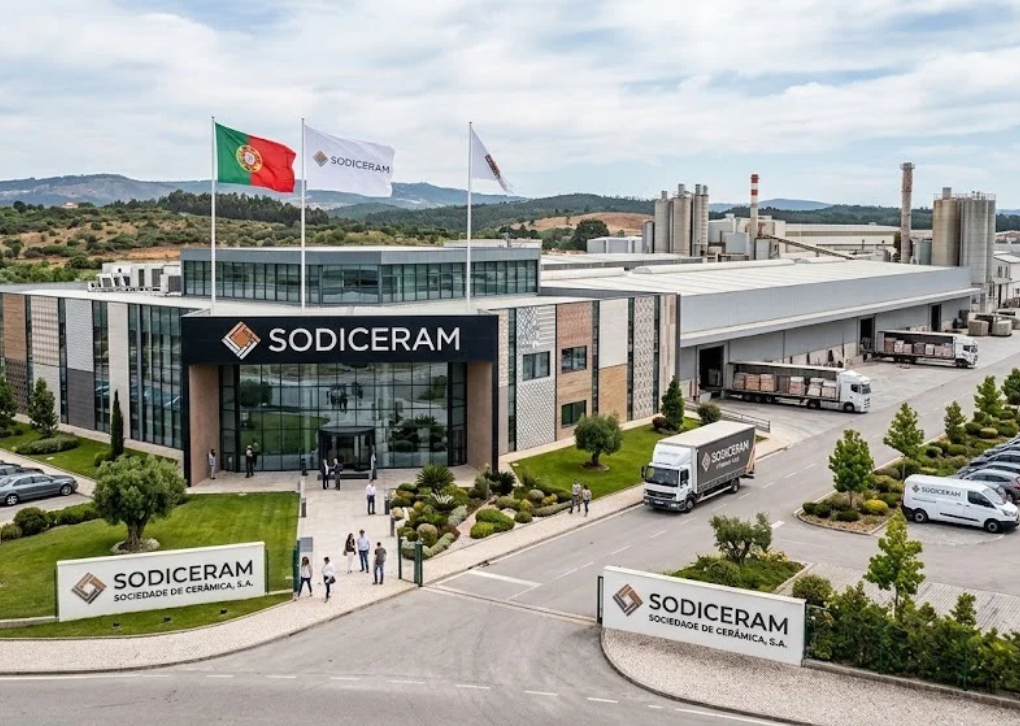
Sodiceram is a term appearing in online articles about ceramic materials, building surfaces, and modern construction. Some websites describe it as a sodium-enhanced ceramic designed to improve durability, reduce water absorption, and withstand demanding conditions. However, these descriptions do not establish a universally recognized material category or verify the performance of a specific product.
The distinction matters if you are researching tiles, planning a renovation, or deciding whether a material advertised under this name deserves a premium price. Understanding what the term refers to, which claims remain unverified, and how established ceramic standards work can help you make a more informed decision.
What Is Sodiceram?
Sodiceram is an ambiguous term used online in connection with ceramics. Recent articles commonly present it as a ceramic material incorporating sodium-based compounds, while historical business records associate a similar name, SO DI CERAM, with a French company involved in the sanitary equipment and decorative-products trade. These references should not automatically be treated as the same entity.
bardid.co.uk+1
The newer material-related descriptions typically suggest that sodium compounds are incorporated into a ceramic formulation to influence its behavior during firing. Although sodium compounds are genuinely used in ceramic and glass manufacturing, that general scientific fact does not prove that every property attributed to Sodiceram belongs to a real, commercially available product.
The most accurate way to understand the term is to separate three questions:
-
What does the name refer to? Online, it is commonly associated with an alleged advanced ceramic material.
-
Is there a verified product behind the name? The available evidence reviewed here does not establish a clearly identified manufacturer with a standardized Sodiceram specification.
-
Can its performance be evaluated? Only when a specific product has identifiable technical data and suitable test results.
This distinction prevents an unfamiliar name from being mistaken for proof of advanced technology.
What Is Sodiceram Made Of?
Online descriptions often associate Sodiceram with a mixture of traditional ceramic raw materials and sodium-based compounds. However, a universally accepted formulation for a material under this name has not been established by the sources reviewed.
The materials commonly mentioned
| Material or compound | General role in ceramics |
|---|---|
| Clay | Provides a workable body and contributes to the fired ceramic structure. |
| Silica | Helps form the ceramic body and influences its behavior during firing. |
| Alumina | Can contribute to refractory behavior, hardness, and structural properties, depending on the formulation. |
| Sodium oxide or sodium-containing compounds | Can act as fluxes in suitable formulations, helping promote vitrification and influencing firing behavior. |
These are general examples from ceramic science, not a verified ingredient list for Sodiceram.
A flux helps a ceramic mixture develop a glassy phase during firing. Under appropriate conditions, this can improve particle bonding and reduce porosity. The result depends on the entire formulation, firing temperature, manufacturing method, and final microstructure—not simply on the presence of sodium.
A seller claiming that a particular product contains a sodium-enhanced formulation should therefore provide its actual technical documentation. Without that evidence, its composition remains uncertain.
How Is Sodiceram Supposed to Be Manufactured?
Articles describing Sodiceram commonly outline a process similar to conventional ceramic production. That process is scientifically plausible as a general description, but it should not be presented as a confirmed manufacturing specification for this particular name.
1. Raw material preparation
Ceramic ingredients are selected, measured, and blended to achieve the desired properties. Particle size, mineral composition, moisture, and additive levels can all affect the finished product.
2. Shaping
Depending on the intended product, the prepared material may be pressed into a tile, extruded into a profile, or shaped using another suitable process.
3. Drying
Excess moisture is removed under controlled conditions. Uneven drying can cause warping, cracking, or dimensional problems.
4. Firing
The shaped body is heated in a kiln. Mineral transformations, sintering, and the formation of glassy phases influence density, strength, and water absorption.
5. Surface finishing
A ceramic product may receive a glaze, polish, textured finish, or other surface treatment. The finish affects appearance, cleanability, wear, and sometimes slip resistance.
These stages describe established ceramic manufacturing principles. They do not confirm that a commercial product named Sodiceram follows this exact sequence or achieves any particular performance level.
What Properties Are Claimed for Sodiceram?
Online articles frequently associate Sodiceram with several desirable characteristics. Each should be treated as a claim requiring product-specific evidence.
Low water absorption
A dense ceramic body may absorb little water, but the absorption rate must be measured. A product name or marketing description cannot establish its actual performance.
Strength and durability
Strength depends on composition, manufacturing quality, thickness, geometry, and the way the product is installed. Ask for test results appropriate to its intended use.
Heat and temperature resistance
Thermal performance varies between formulations and products. Resistance to ordinary kitchen heat does not automatically mean resistance to thermal shock or direct flame.
Chemical resistance and easy maintenance
Cleaning performance depends on the glaze, surface finish, grout, and chemicals used. The manufacturer should specify suitable cleaning products and any restrictions.
Does sodium automatically make a ceramic stronger?
No. Sodium-containing compounds can influence melting behavior and vitrification, but the outcome depends on the complete formulation and firing process. More sodium does not automatically mean greater strength, lower porosity, or better resistance to damage.
This is why a technical comparison should use measured results rather than broad descriptions of an allegedly superior material.
Where Could a Product Marketed as Sodiceram Be Used?
If a supplier uses the term for a genuine ceramic tile or slab, its possible applications should be determined by the product’s verified specifications.
| Potential application | What needs to be verified |
|---|---|
| Kitchen floors and backsplashes | Stain resistance, surface durability, cleanability, and slip performance where relevant |
| Bathroom walls and floors | Water absorption, slip resistance, and suitability for wet environments |
| Commercial flooring | Abrasion resistance, breaking strength, expected traffic, and maintenance requirements |
| Outdoor patios | Weather suitability, frost resistance where relevant, drainage, and wet slip performance |
| Countertops and work surfaces | Impact resistance, thermal behavior, chemical resistance, and installation requirements |
| Decorative wall cladding | Fixing system, weight, dimensional stability, and suitability for the substrate |
These are potential applications for appropriately specified ceramic products, not verified uses of a standardized Sodiceram material.
For example, a tile that performs well on a bathroom wall may not be suitable for a frequently wet floor. Likewise, a product designed for indoor use should not be assumed to withstand freezing temperatures outdoors.
The intended application should determine the specification—not the other way around.
Sodiceram vs. Standard Ceramic vs. Porcelain
One of the most useful comparisons for buyers is between an unfamiliar product name and established ceramic categories.
Porcelain tile is a recognized category with defined technical requirements. ISO 13006 sets out classifications, characteristics, and marking requirements for ceramic tiles.
ISO
Sodiceram, by contrast, has not been established by the reviewed sources as a standardized category with one universal formulation or set of performance requirements.
| Comparison factor | Standard ceramic tile | Sodiceram as described online | Porcelain tile |
|---|---|---|---|
| Recognized product category | Yes | Not established as a universal category | Yes |
| Standardized classification | Depends on product category and applicable requirements | No universal specification verified | Defined classification requirements |
| Water absorption | Varies by product | Specific claims require verification | Defined requirements apply to the relevant classification |
| Mechanical strength | Product-dependent | Independent data needed | Product-dependent within applicable requirements |
| Heat and chemical resistance | Depends on formulation and finish | Not established by the name | Depends on product and exposure conditions |
| Price | Depends on quality, size, and finish | No reliable general price established | Depends on quality, size, and finish |
| Best purchasing method | Check specifications for intended use | Verify the actual manufacturer and test data | Check specifications for intended use |
This comparison does not mean that porcelain is always the best choice or that every conventional ceramic tile has the same properties. It means that established classifications give buyers a more reliable basis for comparing products.
Is Sodiceram better than porcelain?
There is insufficient verified evidence to conclude that it is. A product sold under this name could only be compared fairly with porcelain after its composition, test results, intended application, and applicable standards were established.
A claim of superior performance should be supported by comparable measurements. For example, water absorption should be compared using an appropriate test method, rather than by relying on descriptions such as “ultra-dense” or “next-generation.”
How to Verify a Sodiceram Product Before Buying
If you encounter a supplier advertising Sodiceram, use the following checklist before paying a premium or specifying the material for a construction project.
1. Identify the actual manufacturer
Ask for the manufacturer’s legal name, country of manufacture, product reference, and official contact details. A retailer’s product name is not enough to establish who made the material.
2. Request a technical data sheet
The document should identify the product and list relevant characteristics. Depending on the intended use, these may include:
-
Water absorption
-
Breaking strength or breaking load
-
Abrasion resistance
-
Chemical resistance
-
Slip resistance, where applicable
-
Dimensional tolerances
-
Frost resistance, if required
-
Recommended installation method
-
Cleaning and maintenance instructions
Not every characteristic is relevant to every ceramic product. The manufacturer should identify which standards and tests apply.
3. Check the applicable standard
For ceramic tiles, ask whether the product is classified under ISO 13006 or another applicable recognized standard. Check that the declaration, test report, and product label refer to the same product.
A standard’s existence does not certify a particular seller or product automatically. The supporting documentation must be genuine and relevant.
4. Look for independent test reports
A technical brochure may contain useful specifications, but independent laboratory reports can provide stronger evidence for important performance claims.
Check the laboratory identity, test date, methods, specimen identification, and measured results. Confirm that the tested sample corresponds to the product you intend to purchase.
5. Inspect a physical sample
Examine the finish, dimensions, edges, and visible defects. Where practical, compare samples from different batches.
Do not rely on improvised scratch tests or household water tests as substitutes for standardized laboratory measurements. These tests can damage samples and do not reliably establish a tile’s classification or long-term performance.
6. Compare the complete installed cost
A low purchase price does not necessarily produce a low project cost. Include adhesive, grout, cutting, waste, substrate preparation, installation labor, delivery, and maintenance.
Ask for a written quotation specifying the product, quantity, dimensions, finish, delivery conditions, and warranty terms.
7. Confirm warranty and after-sales support
Check what the warranty covers, which exclusions apply, and how defects are handled. Obtain the installation instructions in writing, because an unsuitable substrate or adhesive can cause failure even when the tile itself meets its specifications.
Buyer tip: If a supplier cannot identify the manufacturer or provide meaningful technical documentation, do not treat claims about exceptional durability, waterproofing, or heat resistance as established facts.
Is Sodiceram a Historical Company Name?
There is evidence of a French business registered as S O D I C E R A M, associated with sanitary equipment and decorative products. Public business records report that its judicial liquidation was closed for insufficient assets in October 2023 and that the company was subsequently removed from the register.
Pappers+1
This historical business record is relevant because it demonstrates that a similar name has existed in the ceramics-related commercial sector.
However, it does not establish that the historical company developed the sodium-enhanced material described in newer online articles. Nor does it establish that a modern seller using the word Sodiceram is connected to that business.
The distinction is particularly important when searching for an original manufacturer, product catalogue, technical documentation, or authorized distributor. A similar name is not proof of corporate continuity.
Before attributing a product to a historical company, verify the exact legal entity, registration details, trademarks, and product documentation.
What Should Buyers Know About Certification and Standards?
Certification and testing are not merely administrative details. They help establish whether a material is suitable for a particular use.
For ceramic tiles, ISO 13006 provides a framework for product classification, characteristics, and marking. The ISO 10545 series covers relevant ceramic-tile test methods, including methods for assessing water absorption and other performance characteristics.
When reviewing documentation, distinguish between three different things:
-
A standard: Defines requirements or test methods.
-
A test report: Records the results obtained from a particular sample using specified methods.
-
A certification or declaration: Provides a particular form of conformity evidence, whose scope depends on the scheme and issuing organization.
These documents are not interchangeable. A supplier mentioning an ISO standard does not prove that its product has passed every relevant test or received independent certification.
Likewise, a product can have useful measured properties without using a distinctive marketing name. Buyers should prioritize verifiable specifications over novelty.
Advantages and Limitations: What Can Be Said Reliably?
The supposed advantages of Sodiceram need to be separated from the general benefits of well-manufactured ceramic products.
Potential advantages, if supported by product data
A properly engineered ceramic product may offer:
-
A suitable finish for a specific interior or exterior design.
-
Low water absorption, where testing confirms it.
-
Appropriate resistance to wear and household chemicals.
-
Straightforward cleaning when the surface and installation are suitable.
-
Long service life when the product is selected and installed correctly.
These are possible characteristics of ceramic products in general. They are not proven advantages of Sodiceram simply because an online article attributes them to the name.
Limitations and uncertainties
The main concern is the lack of a clearly established, universal Sodiceram specification in the sources reviewed.
Without a verified manufacturer and reliable technical data, buyers cannot confidently determine whether two products advertised under the same name have comparable compositions, performance levels, or manufacturing processes.
Other practical concerns include unclear warranty coverage, uncertain availability, and difficulty comparing prices against recognized products.
The sensible response is not to assume that the material is impossible or that every claim is false. It is to withhold judgment until a particular product can be evaluated using appropriate evidence.
How to Choose the Right Ceramic Material for Your Project
If your goal is to select a durable surface, begin with the demands of the project rather than an unfamiliar material name.
For a bathroom: Consider water absorption, slip resistance, wet-area suitability, grout maintenance, and the installation system.
For a kitchen: Evaluate staining, cleaning requirements, surface durability, and the product’s response to the temperatures and substances it may encounter.
For a commercial floor: Prioritize documented strength, abrasion performance, expected traffic, maintenance costs, and replacement availability.
For an outdoor area: Verify weather suitability, frost resistance where applicable, drainage requirements, and slip performance in wet conditions.
For a countertop: Check impact resistance, heat limitations, chemical exposure, support requirements, and the manufacturer’s installation instructions.
Obtain samples and written specifications from multiple suppliers. Compare products against the same performance criteria, and calculate the total installed cost rather than the price per tile alone.
If a Sodiceram-branded product meets those criteria and its documentation can be independently verified, it can be assessed on its merits. If the evidence is missing, an established ceramic product with clearly documented properties is the more straightforward option.
Final Verdict: What Does Sodiceram Actually Mean?
Sodiceram is currently used online to describe an alleged sodium-enhanced ceramic material, but the sources reviewed do not establish a single standardized material category, a universally accepted formulation, or verified performance specifications.
A similarly named historical French ceramics-related business is documented in public records, but its existence does not prove that it is connected to the newer material claims.
For anyone researching the name, the most useful next step is to identify the exact product and manufacturer. Request technical data, confirm the applicable standards, and review test results before relying on claims about durability, water absorption, heat resistance, or chemical performance.
The broader lesson is simple: evaluate the evidence behind a material, not just the name used to market it. That approach makes it easier to compare ceramic products fairly, avoid unsupported promises, and choose a surface suited to the project.
5. Frequently Asked Questions
1. What is Sodiceram?
Sodiceram is a term used online in connection with an alleged sodium-enhanced ceramic material. Its exact composition, standardized classification, and performance have not been established by the evidence reviewed.
2. Is Sodiceram a real ceramic material?
The term appears in online articles, but that alone does not establish a recognized material category or a verified commercial product. A specific manufacturer’s documentation and independent test results are needed to assess the claim.
3. What is Sodiceram made of?
Online descriptions mention traditional ceramic ingredients, such as clay and silica, combined with sodium-based compounds. However, a verified universal formulation for a material sold under this name has not been established.
4. Is Sodiceram better than porcelain?
There is insufficient verified evidence to make that comparison. Porcelain is an established ceramic category with defined classification requirements. Compare actual products using water absorption, strength, abrasion resistance, and other relevant specifications.
5. Where can I buy Sodiceram?
A verified manufacturer or authorized supplier for the alleged material was not established through the sources reviewed. Before buying, identify the seller and manufacturer, request a technical data sheet, and verify the product’s performance claims.
6. Is Sodiceram waterproof and heat-resistant?
These properties cannot be confirmed from the name alone. Water absorption and thermal performance depend on the particular ceramic formulation, manufacturing process, finish, and intended application. Request appropriate test results before relying on these claims.
7. How can I check whether a Sodiceram product is genuine?
Ask for the manufacturer’s legal identity, product reference, technical data sheet, applicable standards, independent test reports, and written warranty. Verify that the documents correspond to the exact product being offered.
